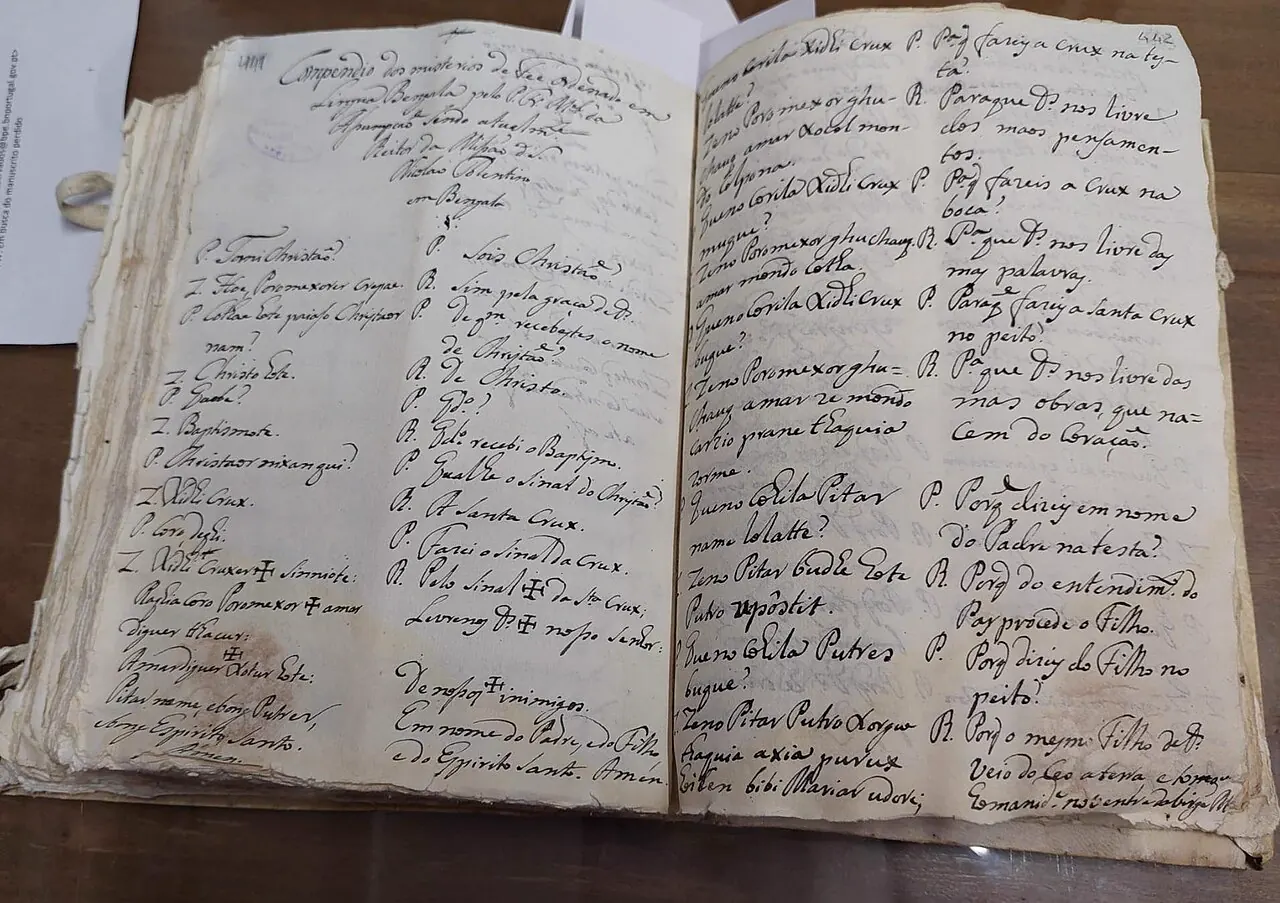

An open manuscript with handwritten text in two languages

Multidisciplinary submissions ยท 12 issues per annual volume

Editorial policy and peer review

Raritan considers scholarship and criticism across history, literature, politics and the arts, including work that crosses disciplinary boundaries.

Submission scope

Editors read for a defined question, a supported argument and a clear contribution to its field or fields.

  • History and literature

    Research, interpretation and criticism with explicit sources and context.

  • Politics and the arts

    Analysis that addresses institutions, ideas, works or practices with precision.

  • Cross-disciplinary work

    Manuscripts that make their methods intelligible to readers beyond one specialty.

Submissions must be original and accompanied by a title, main author, email address, keywords, abstract and readable PDF. Coauthor names and affiliations belong in the relevant form fields.

Check submission requirements
An open historical volume filled with handwritten text

The peer-review process

Raritan uses single-anonymous review: reviewers may see author names, while reviewer identities are withheld from authors.

  1. Editorial screening

    The office checks scope, completeness and readability. A manuscript that does not fit the stated scope may be declined without external review.

  2. Reviewer assessment

    Reviewers consider the argument, use of evidence, contribution, structure and presentation. Reviewer comments inform the editorial decision.

  3. Decision and revision

    The office may accept, request revisions or decline a manuscript. Any required revisions must be supplied through the author workflow.

  4. Galley confirmation

    Before publication, an accepted author uploads the final PDF, checks its galley proof and confirms the same details and file.

A pencil, sharpener and shavings on a lined notebook

Research and publication ethics

These requirements apply to authors, reviewers and the editorial office throughout consideration and publication.

Original work and attribution

Authors must submit their own work, cite sources and identify quotations, datasets, images and third-party material. Plagiarism, fabricated evidence and undisclosed duplicate publication are grounds for rejection or correction.

Authorship and contributions

Every listed author must have made a substantive contribution and accept responsibility for the manuscript. The main author must ensure that coauthor names and affiliations are accurate.

Conflicts and confidentiality

Authors and reviewers must disclose financial, institutional or personal conflicts that could affect judgment. Reviewers must treat manuscripts and reports as confidential.

Research involving people

Where applicable, authors must describe consent, ethics approval and privacy safeguards. Material that cannot lawfully or ethically be published must be removed or properly anonymized.

Generative AI assistance

Authors must disclose any generative AI use that materially affected the argument, evidence, analysis or wording. A tool cannot be an author. Authors remain responsible for accuracy, attribution and copyright.

Corrections and complaints

Send documented concerns with a paper ID where available. The office will assess errors, competing interests and research-integrity complaints, then issue a correction, clarification or retraction when warranted.

Contact the office about an ethical concern